
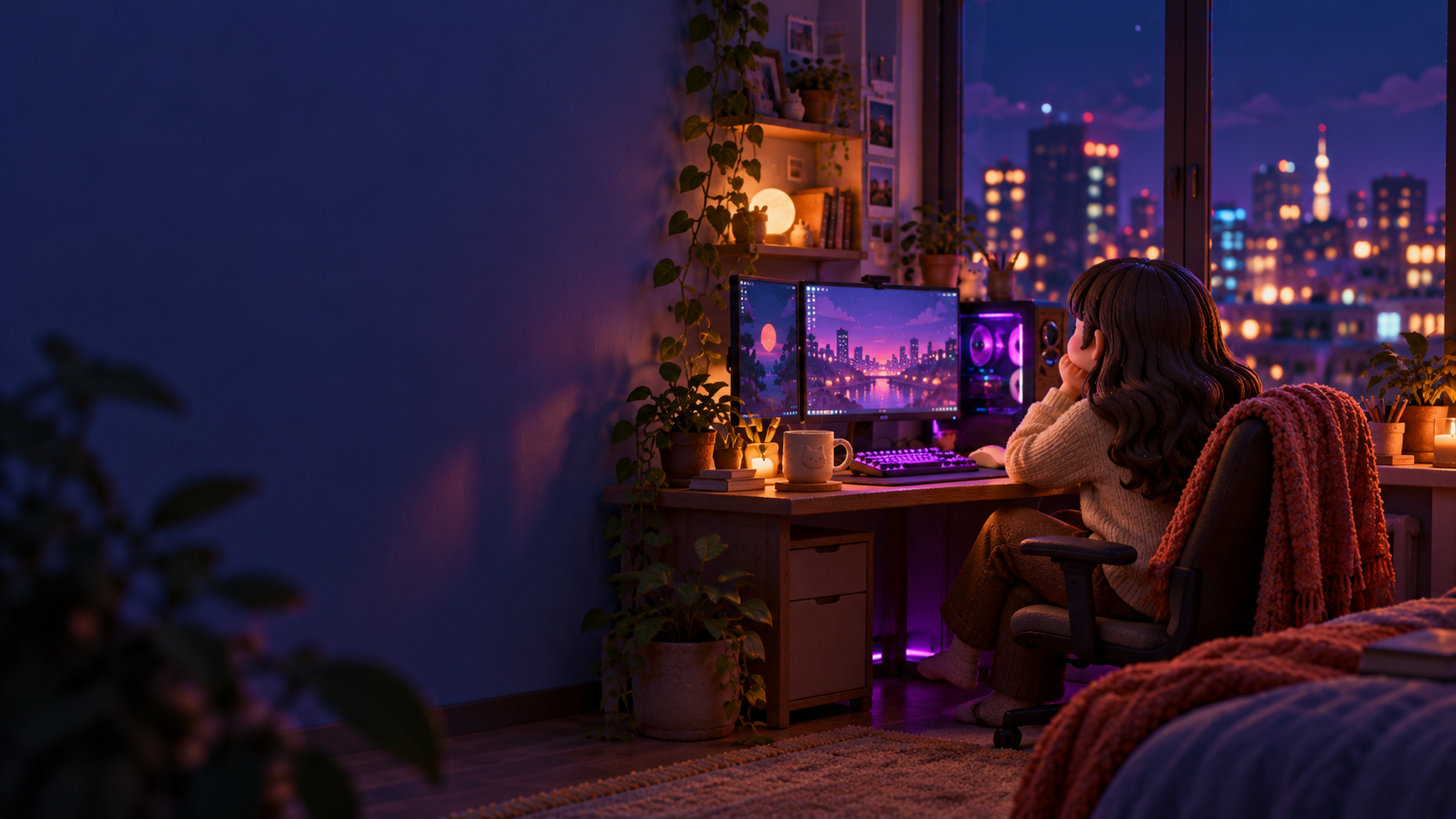
There’s a particular kind of disappointment in finally having a bit of free time, opening a game you used to love, and realising that you just can’t seem to get into it. You scroll through your library, start something, play for half an hour, then turn it off. Sometimes you spend more time thinking about playing games than actually playing them, which can leave you wondering why something that once felt so easy to enjoy now feels strangely difficult.
When you were younger, games could take over an entire afternoon without much effort. You could get completely absorbed in them, and there was usually far less mental noise competing for your attention. You weren’t necessarily thinking about whether you were making good use of your time, what needed to be done around the house, whether you had replied to that message, or what Monday was going to look like. As an adult, even when you technically have free time, that time is often carrying a lot more with it.
A free Saturday at 17 and a free Saturday at 34 are not really the same thing. Adult life tends to come with an invisible list running in the background: washing, groceries, bills, work, family, appointments, things you have been meaning to organise and things you feel slightly guilty for putting off. None of these things have to be urgent to take up space in your mind. You can have three hours to yourself and still not feel like those three hours fully belong to you.
That can make it harder to become absorbed in anything, not just games. It can also create a strange pressure around leisure, where relaxing starts to feel like something that needs to be justified. Once that mindset becomes familiar, even sitting down to play can come with a quiet sense that you should be doing something else instead.
There is also something else going on when we revisit games we loved when we were younger. Old games are often tied to whole periods of life rather than just to the game itself. They can bring back memories of school holidays, childhood bedrooms, staying up late with friends, or getting something you had been waiting months to play. Sometimes when we say that games do not feel the same anymore, what we are really noticing is that the life around them has changed.
We may be missing the amount of time we had, the people we were around, the way excitement came more easily, or the version of ourselves who had fewer roles to carry. That does not mean adulthood is somehow worse, but it does mean that replaying an old game cannot recreate the circumstances in which we first loved it. The game may be the same, but we are not.
Our tastes also change. Someone who once loved enormous 100-hour RPGs might now find the thought of starting one exhausting, while a shorter game feels much more appealing. Someone who used to spend every weekend playing competitively online might now prefer something slower and more self-contained. It is easy to interpret this as losing interest or becoming less passionate, but often it simply reflects a different life and a different relationship with time and energy.
Sometimes, though, it is not just about being busy or changing tastes. There is a difference between not having enough time to enjoy something and finally having the time, only to discover that you cannot seem to enjoy it at all. People often notice this first through their hobbies. Games feel flat, music does not land the same way, social plans feel more draining than enjoyable, and things that would usually provide some sense of pleasure or anticipation begin to feel strangely neutral.
That can happen when we are stressed, burnt out or depressed. Depression does not always look like intense sadness. Sometimes it looks more like a gradual loss of interest in things that used to matter. You can still remember enjoying them and still want to enjoy them, but the feeling itself is harder to access.
This can be particularly confusing because there may be nothing obviously different about the activity. The game is still there, you still have the time, and you still know that this is something you usually like, but you are not getting much from it. It can quickly become another source of self-criticism, with thoughts like Why can’t I just enjoy myself? or I used to have hobbies. Sometimes a noticeable change in your ability to enjoy things is worth paying attention to in its own right.
Gaming itself can play very different roles depending on what is happening in the rest of your life. At times, it can be a genuinely restorative form of escape. It can offer challenge, connection, creativity, mastery, or simply a way to decompress at the end of a difficult day. At other times, it can become less about enjoyment and more about avoiding things that feel overwhelming.
I don’t think that makes gaming inherently healthy or unhealthy. A more useful question is often what role it is playing for you at that point in time. Are you playing because you are enjoying yourself and giving your mind a break, or are you finding yourself playing almost automatically because you do not really know what else to do? Are you connecting with friends and relaxing, or mostly trying not to think about something outside the game? The answer does not have to be the same every day.
One of the less obvious changes that comes with adulthood is how easily identity can become organised around responsibility. We become workers, partners, parents, professionals, carers, homeowners and the person who remembers the appointment, pays the bill, responds to the email and makes sure everything keeps moving. Those roles matter, but they can also become so dominant that the parts of us which exist purely because we enjoy them start to shrink.
That is one reason play still matters in adulthood. It does not have to improve you, teach you something, make you money or contribute to some larger goal. You do not need to become especially good at it, and it does not need to become a project. Sometimes doing something because it is enjoyable is enough. For people who are very used to measuring themselves through productivity or achievement, that can be harder than it sounds.
So perhaps the goal is not to make games feel exactly the way they did when you were 15. That feeling belonged to a particular time in your life, and trying to reproduce it perfectly may only make the difference more obvious. It may be more helpful to get curious about what enjoyment looks like for you now, and whether your relationship with play has changed alongside everything else.
That might mean choosing different kinds of games, giving yourself permission to play for shorter periods, or making deliberate room for hobbies instead of hoping they fit into whatever energy is left at the end of the week. It might also mean noticing that the issue is not really about games at all. Perhaps you are exhausted, finding it difficult to switch off, feeling guilty whenever you are not being productive, or noticing that the things you usually enjoy have felt flat for a while.
Sometimes our hobbies are one of the first places we notice that something in us has shifted. If you have found yourself sitting in front of a game you know you should enjoy and wondering why it no longer feels the same, it may be worth paying attention to the question. Not just what has changed about the game, but what has changed in your life, in your relationship with yourself, and in what you might be needing now.
If some of this feels familiar - whether it’s finding it harder to enjoy things, feeling constantly switched on, or noticing that work, responsibility and self-criticism have started to take up more space than you would like - therapy can be a place to slow that down and make sense of what is happening.
I provide counselling and psychotherapy via Telehealth or in-person in my cozy Essendon office in Melbourne. I work with adults around anxiety, depression, perfectionism, identity and longstanding patterns that can make it difficult to feel fully present in their own lives. My approach is collaborative, practical and reflective, with space to understand where these patterns come from as well as how to change them.
If you’re curious about whether therapy might be helpful, I offer a free 15-minute consultation to talk through what you’re looking for and see whether working together feels like a good fit.